

The updates that matter most for marketing and technology leaders, and what they could change about your Salesforce plans for 2027.
Every fall at Dreamforce, Salesforce shares what’s new across its platform and where it’s headed next. For marketing and technology leaders, it’s an early look at what to plan for heading into Q4 and the year ahead.
This year covered the expected: new features, new agents and new ways to work with your data. But the biggest news is that Salesforce users no longer “have to come to Salesforce to get work done,” as Salesforce put it. The data, workflows and actions your business runs on can now come to you, inside the tools you’re already using.
That shift runs through the conference’s biggest announcements: AIforce, Campaign Agent in Marketing Cloud Next, a new role for structured content, the Flex Credits consumption model and a platform opening up through MCPs and APIs.
Let’s dig in.
1. AIforce Makes Data 360 the Foundation Everything Runs On
What’s new: AIforce brings Salesforce data, workflows and actions into the tools your people already use, so they can get work done by simply asking. It comes in three forms:
- Slackforce can update records and take action from a Slack conversation
- Claudeforce uses Salesforce inside Claude, with prebuilt skills (in beta)
- Agentforce Coworker is an AI teammate inside Salesforce, available now
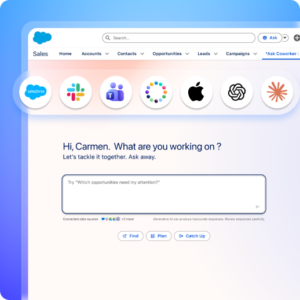
Why it matters: When agents can act on your data without anyone opening Salesforce first, Data 360 stops being a CDP project running alongside marketing. It becomes the operational foundation every new interface depends on. Salesforce’s own Dreamforce sessions focused on building “trusted context” for Agentforce and deciding which data sources are worth bringing in.
The quality of your identity, consent, real-time signals and business rules now shows up in every action an agent takes.
Where to start:
- Pilot one everyday workflow with one team in Slack or Claude, then expand what works.
- Map your Data 360 foundation on a single page: which sources are connected, which update in real time and which daily, and where customer consent lives.
2. Marketing Cloud Moves From Journey Automation to Decision Automation
What’s new: Salesforce is bringing its vision of the agentic enterprise to marketing, with people and AI agents working side by side, including in front of your customers:
- Campaign Agent in Marketing Cloud Next turns a goal into a live campaign, choosing audiences, content and timing within your brand guidelines
- New AI agents handle customer moments like service questions, shopping assistance and lead qualification
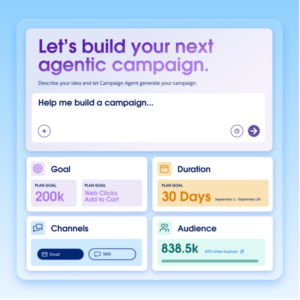
Why it matters: Marketers increasingly define the goal and the guardrails, and the system makes more of the decisions to get there. Salesforce’s own implementation guidance emphasizes choosing the right use cases, clear ownership, strong underlying data and measurable outcomes.
That tells you where the important work is moving: less time mapping every step of a journey, more time deciding what success looks like and what your brand should always stand for.
Where to start:
- Take stock of what’s running in Marketing Cloud today, including journeys, automations and data you’re storing but no longer using.
- Pick one campaign goal to test with Campaign Agent, and define the success metric before you turn it on.
- Write down your brand guardrails for agents: tone, offer rules and when a person steps in.
3. Content Becomes Infrastructure for People and Agents
What’s new: This may be the sleeper story of Dreamforce. With the acquisition of Contentful, Salesforce showed structured, reusable, governed content built to work across both human experiences and AI agents. Palmata adds another dimension, helping marketers see and shape how answer engines describe and recommend their brand.
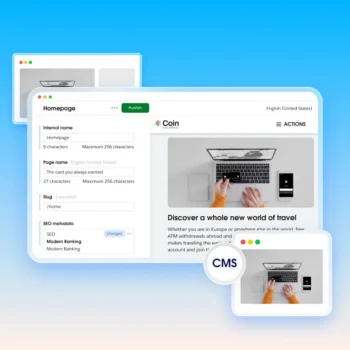
Why it matters: Your brand content now serves two audiences: people, and the agents assembling experiences on their behalf. That means content built as reusable pieces with the metadata an agent can use, beyond pages a person designed. It also brings a new discipline: managing how your brand shows up in AI-generated answers, not only on your own site.
Where to start:
- Check whether your content exists as reusable components with clear metadata, or only as finished pages.
- Ask the major AI assistants how they describe your brand and your top products, and save the answers as your baseline.
- Choose one high-traffic experience, like product or service pages, to restructure first.
4. Consumption Forecasting Becomes Part of Marketing Planning
What’s new: At Dreamforce, Salesforce focused on helping customers understand and forecast Flex Credits, the consumption model behind Data 360 and Agentforce. Credits are used as the system does work:
- Bringing data in, from daily updates to real-time streams
- Matching records into one profile per customer
- Building segments and sending them to your channels
- Running agent actions for your people and your customers
Salesforce’s Digital Wallet shows what you’ve used and what’s left.
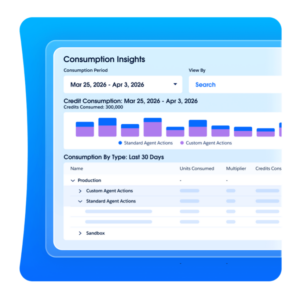
Why it matters: Designing an agentic journey now includes operating cost, right alongside audience, channel and experience. The workflows you move into Slack and Claude, the data you connect and the customer moments you hand to agents all shape what you use. Real-time data uses more credits than daily updates, so the brands that get the most value use it where timing changes the outcome.
Where to start:
- Build your 2027 plan around use cases, then estimate the consumption each one needs.
- Launch one use case tied to revenue first, so you learn real usage patterns before you scale.
- Set usage alerts in Digital Wallet and review consumption regularly with your Salesforce account team.
5. The Real Value Moves to How Everything Connects
What’s new: Salesforce is opening its platform through MCPs, APIs and skills, so agents can reason and act across data, workflows and permissions that live in other tools. Its Google Cloud announcement goes further, letting agents across Salesforce and Gemini Enterprise act on shared data without custom integrations for every interaction.
Why it matters: Your advantage comes less from any single tool and more from how well your data, workflows and permissions travel across all of them. Salesforce is making that easier than ever. The brands that benefit most will be the ones whose systems are ready to connect.
Where to start:
- Map where customer data and workflows travel today across Salesforce, your data warehouse and your other key tools.
- Decide who approves which tools and agents can act on your Salesforce data.
- Find one custom integration you could simplify with Salesforce’s new MCP and API options.
Getting Ready for 2027
Salesforce has never been more capable or easier to use. Getting the foundation right is the hardest part, and it’s also where the biggest growth comes from. The brands that grow the most with Salesforce in 2027 will have three things working together:
- A data foundation they trust
- Customer experiences built for people and agents
- A clear plan for where to invest
Every first step above is work we do with clients every day, with strategy, creative, data and technology working together. At Bold Orange, our goal is to give brands the shortest path from platform investment to real impact. Whether you’re exploring what Agentforce can do, looking to get more from what you already have or planning your next investment, we’re your people. Let’s talk.